ISO consulting for Mining & Natural Resources
Extractive and resource operations proving environmental stewardship and safety leadership under scrutiny.
Mining and natural resource operations in Canada typically certify to ISO 14001 and ISO 45001, adding ISO 9001 where product specifications drive sales, because customers, communities and regulators look closely at environmental and safety performance. Members of the Mining Association of Canada also implement Towards Sustainable Mining (TSM), which is mandatory for their Canadian operations.
The risks are long-lived and visible. Tailings, water, dust and land disturbance are managed over the life of a mine and well past closure, and safety risks range from ground control and mobile equipment to confined spaces and explosives. Work happens at remote sites with rotating crews and many contractors, and mine-specific health and safety rules apply on top of general workplace law, such as Ontario's Regulation 854 for mines and mining plants.
On editions: ISO 45001:2018 is current. ISO 14001:2026 and ISO 9001:2026 were published in 2026, and many certified organizations remain on the 2015 editions, whose certificates stay valid during the transition periods that end in 2029.
The pressures you are under
Mining & Natural Resources operations face requirements that generic consultants miss. Each one below names the module in the compliance management software that answers it.
Environmental stewardship must be proven under public scrutiny.
Standards: ISO 14001 clauses with status, linked evidence and a statement of applicability export.
Safety leadership in inherently high-risk operations.
Safety: Near-miss and incident reporting with its own dashboard and permissions.
Integrated management across remote, multi-site operations.
Audits: An annual audit programme with the checklist, findings and evidence in one workspace.
Standards we implement here
Many mining & natural resources clients integrate two or three standards into a single management system rather than running them in parallel.
How do ISO 14001 and Towards Sustainable Mining fit together?
They answer different questions. TSM is an industry performance program: companies report against protocols and indicators covering topics such as tailings management, water stewardship, climate change, biodiversity, crisis management, Indigenous and community relationships, and safety, health and respect. ISO 14001 is a certifiable management system standard that shows how environmental aspects, compliance obligations and objectives are planned, controlled, checked and improved.
A site can run both without duplicating effort. The ISO 14001 system supplies the document control, internal audits, corrective action and management review, and TSM protocol evidence can be produced from the same records.
ISO 14001
The environmental management system, built around significant aspects such as tailings, water discharge, dust and waste rock, and a register of the permits and approvals the site holds.
ISO 45001:2018
The health and safety management system, covering hazard identification for routine and non-routine tasks, worker participation and the control of contractors on site.
ISO 9001
Relevant where concentrate, aggregate or processed material is sold against a customer specification, and sampling and shipment records have to stand up to a dispute.
Towards Sustainable Mining
The Mining Association of Canada program, mandatory for members at their Canadian operations, with annual progress reporting against its protocols.
What do ISO auditors look for at a mine site?
Auditors follow the significant aspects and hazards into the operation. Under ISO 14001:2015 they ask how aspects were evaluated, how each compliance obligation was evaluated and when, and whether monitoring results feed back into objectives. Under ISO 45001:2018 they test how hazards are identified for non-routine work such as shutdowns, how contractors are briefed and supervised, and how workers take part in hazard identification.
Emergency response is tested in practice. Auditors look for drills, the gaps they revealed and the follow-up actions, for both environmental releases and safety emergencies. On-site assay or testing laboratories may also be asked for evidence of competence, which is where ISO/IEC 17025 applies. Where ISO 9001 is in scope, expect the auditor to trace a shipment back through sampling, assay results and the certificate of analysis sent to the customer.
Illustrative example: A processing plant's ISO 14001 register lists its effluent discharge approval, but the evaluation of compliance only checks sample results, not the reporting deadlines in the same approval. A late quarterly report becomes the auditor's finding. The fix is evaluating every condition in each approval, not just the limits.
How do you build one management system across remote sites?
ISO 14001, ISO 45001 and ISO 9001 share a harmonized structure: the same clause numbers and titles, common terms and definitions, and identical core text. One integrated system can serve a corporate office, an operating mine, a mill and an exploration camp, with shared procedures and site-level registers for aspects, hazards and legal obligations.
Remote operations depend on records that travel. Rotating crews, fly-in contractors and seasonal camps make paper logs easy to lose, so decide early where inspection, training and incident records are kept and how a supervisor on night shift reaches the current procedure. Contractors working under your permits should be covered by the same controls as your own crews.
Begin with a gap analysis at each site and decide the scope carefully: which operations, which stages of the mine life and which contractor activities are included. Include progressive reclamation and closure work if the site carries it out, because those aspects persist after production ends. For an integrated environment and safety system at a single operating site, certification typically takes nine to fifteen months. To talk through a scope that fits your operations, contact ISO Certification Consultants.
Mining & Natural Resources questions, answered
Is ISO 14001 required for Mining Association of Canada members?
The Mining Association of Canada makes participation in Towards Sustainable Mining mandatory for its members' Canadian operations. ISO 14001 certification is a separate choice. The two work well together: TSM sets performance expectations and reporting against its protocols, and an ISO 14001 system provides the structure of documented controls, internal audits and corrective action that produces the evidence.
Does ISO 45001 certification meet Ontario's mining health and safety regulations?
No. ISO 45001:2018 is a voluntary management system standard, and certification does not replace any legal obligation. Ontario mines still have to meet the Occupational Health and Safety Act and Regulation 854 for mines and mining plants. A good ISO 45001 system helps by keeping legal requirements in a register, assigning controls to them and checking compliance on a schedule.
Can an exploration camp and an operating mine share one ISO certificate?
Yes, if both run under the same management system and are named in the certificate scope. The certification body plans which locations it visits at each audit. Each location needs registers of aspects, hazards and legal obligations that reflect its own activities, because an exploration camp and a processing plant carry very different risks under the same procedures.
How long does ISO 14001 certification take for a mine?
For a single operating site, ISO 14001 certification typically takes nine to fifteen months, and integrating ISO 45001 at the same time adds work but not a second system. The time goes into evaluating aspects and obligations, writing operational controls, building monitoring records and running internal audits and a management review before the two-stage certification audit.
Should a mine certify to ISO 14001:2015 or ISO 14001:2026?
ISO 14001:2026 was published on 15 April 2026, and certificates to ISO 14001:2015 remain valid during a 36-month transition ending in 2029. An operation building a new system can design it to the 2026 edition. One already certified to the 2015 edition keeps a valid certificate and can plan its transition with its certification body, ideally alongside a regular surveillance or recertification audit.
Articles on Mining & Natural Resources
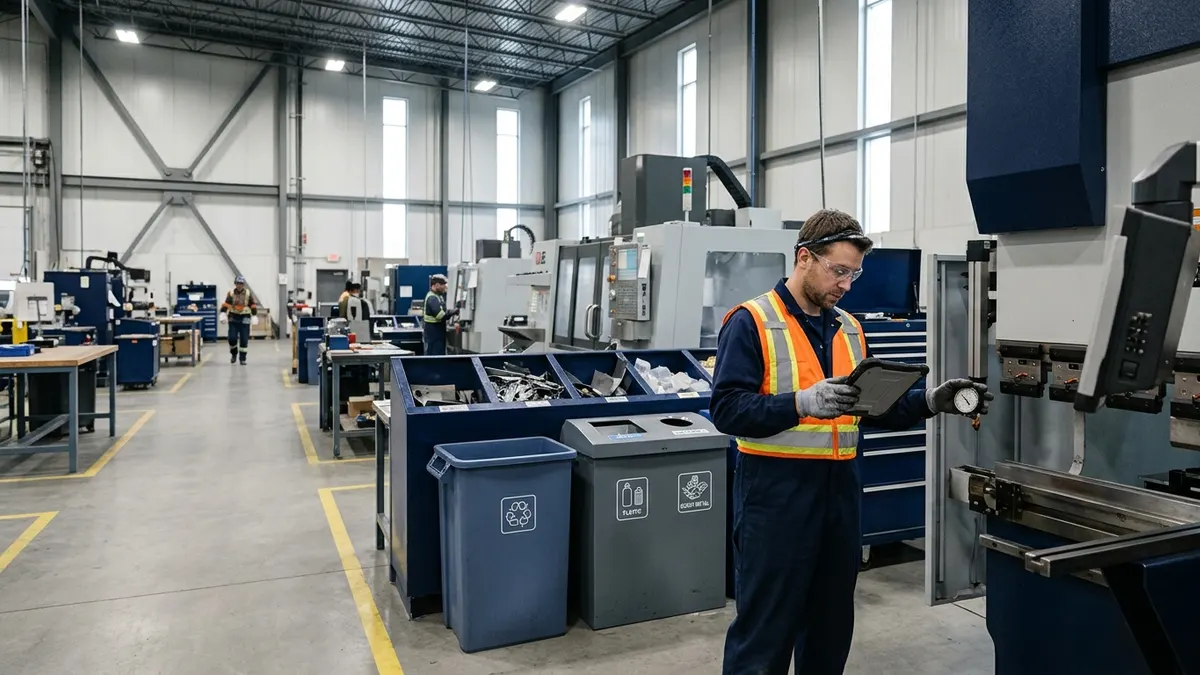
10-Point ISO 14001 Requirements Checklist for Manufacturing Operations
Evaluate your plant with this 10-point ISO 14001 requirements checklist. Verify aspects, legal compliance, and operational controls before your audit.
·9 min read
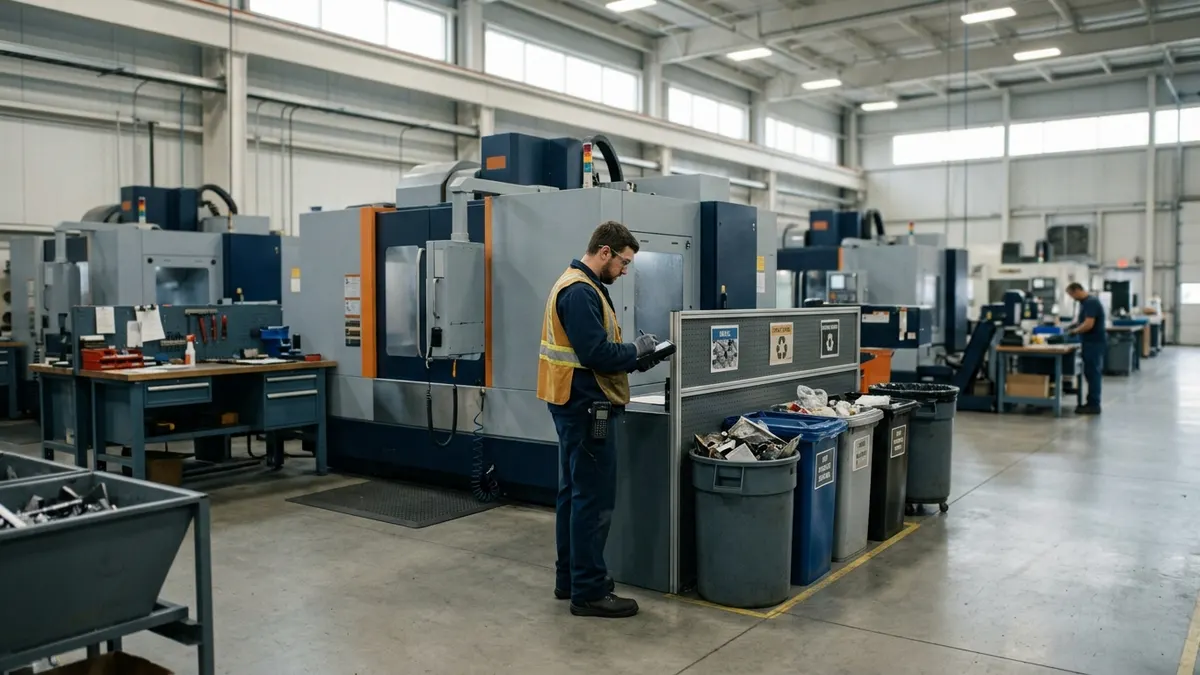
Navigating ISO 14001 Compliance Obligations in Canada: The Plant Manager's Playbook
Master ISO 14001 compliance obligations in Canada. Learn how Ontario industrial facilities identify legal requirements, track updates, and satisfy Clause 6.1.3.
·11 min read

How to Build an ISO 14001 Environmental Aspects and Impacts Register in 6 Steps
Build a compliant ISO 14001 environmental aspects and impacts register with this 6-step practical method designed for Ontario manufacturing facilities.
·10 min read
Software modules used in mining & natural resources
Other industries we serve
Get your mining & natural resources operation certified
Tell us about your operation and what you're certifying for. You'll get a clear, honest read on scope and timeline from a certified lead consultant.
We reply within one business day