Key Takeaways
- A tidy binder of procedures does not prove control; auditors look for evidence that the plant manages the environmental impact of its own activities.
- The ten checks below follow the structure of the standard, from scope and policy through operations, monitoring and management review.
- Environmental aspects, legal obligations and operational controls are the three areas where manufacturing plants most often find gaps.
- Running this list as an internal pass before the registrar arrives turns surprises into a short action list.
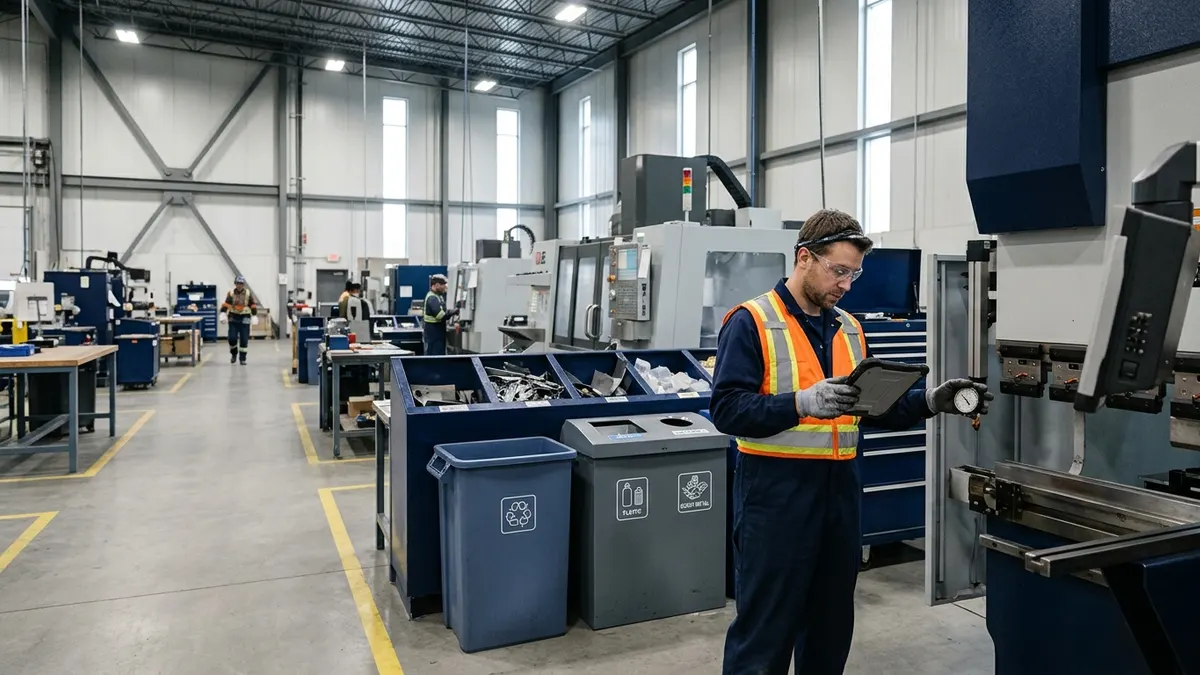
A tidy binder of environmental procedures does not show an auditor that a plant controls its impact on the environment. What counts is whether the people on the floor know which activities matter, which rules apply to them and what to do when something goes wrong. This ISO 14001 requirements checklist walks through ten areas a plant manager can verify in a single working session, in the order the standard presents them.
The current edition is ISO 14001:2026, published in April 2026, and many certified organizations still hold certificates to ISO 14001:2015 during the transition period. The clause numbers below refer to ISO 14001:2015, and each check is written in plain terms so it applies whichever edition your registrar audits you against. ISO's own explanation of ISO 14001 describes what an environmental management system covers, and the ISO 14001 Environmental Management service page explains how the work is usually organized.
1. Context Analysis and EMS Scope Definition (Clauses 4.1 - 4.3 of ISO 14001:2015)
Start by writing down the external and internal issues that affect environmental results, and the expectations of interested parties such as neighbors, regulators, customers and lenders. Then draw the boundary of the management system: which sites, products and activities are inside it.
Check that the scope names every building and yard, not just the production floor. A scope that leaves out the shipping dock or the waste storage area is a common source of audit questions.
2. Leadership Accountability and Environmental Policy (Clauses 5.1 - 5.2)
Top management must show involvement, not just sign a policy. The policy has to commit to protecting the environment, meeting legal and other obligations, and improving over time.
- The policy is available to interested parties and posted where employees and contractors will actually see it.
- Responsibilities are assigned by name or role, so nobody has to guess who owns spill response or waste reporting.
- Leaders can describe the policy in their own words when an auditor asks them about it on the floor.
3. Environmental Aspects and Significant Impact Evaluation (Clause 6.1.2)
An aspect is an activity, product or service that interacts with the environment; an impact is the resulting change. Plants typically list aspects such as coolant use, paint and solvent emissions, scrap metal, compressed air energy and wastewater discharge.
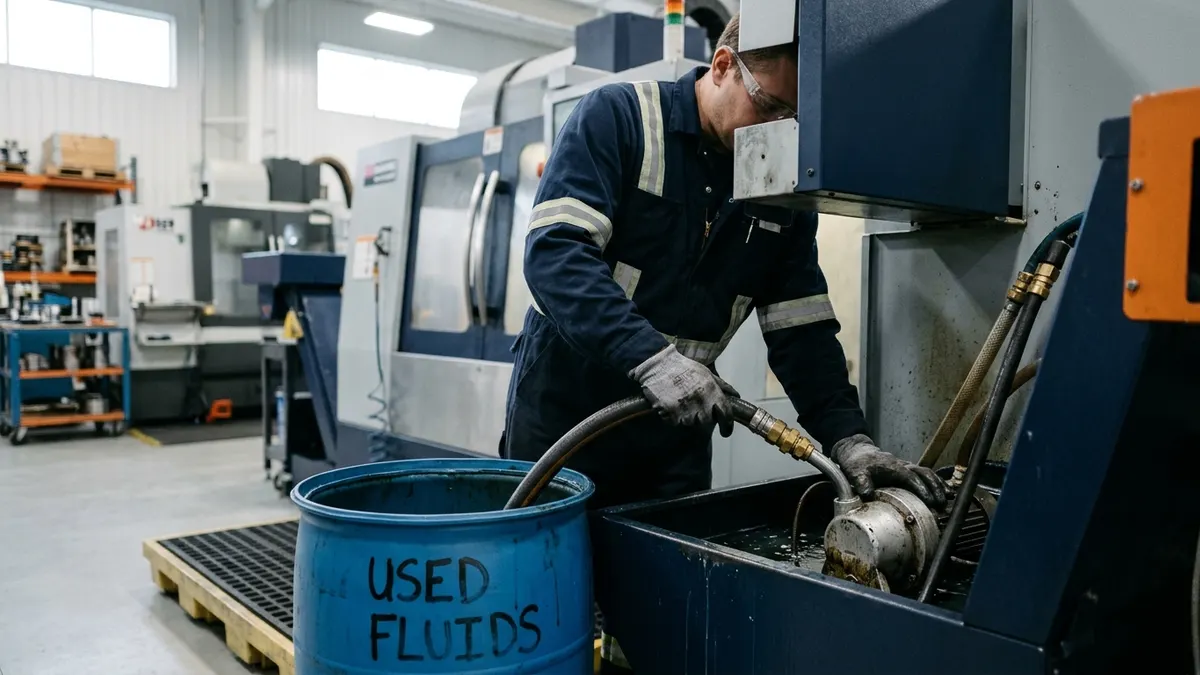
Verify that the evaluation uses a defined method to decide which aspects are significant, and that it covers abnormal conditions and emergencies as well as routine production. The criteria should be written down so a second person could repeat the ranking and reach a similar result.
Did You Know? The standard asks organizations to consider a life cycle perspective when identifying aspects, which means looking beyond the plant fence at inputs and at what happens to products and packaging after delivery.
4. Legal Compliance Obligations and Regulatory Registers (Clause 6.1.3)
The plant must determine which legal requirements and other commitments apply to its aspects, and keep that information current. For an Ontario plant, this usually means the provincial Environmental Protection Act, approvals tied to specific operations, municipal sewer-use rules and any customer commitments that the plant has accepted.
Check that the register links each obligation to the process it affects and to the person who owns it. A list of statutes with no owner and no review date will not satisfy an auditor. The guide to ISO 14001 compliance obligations in Canada goes deeper on building this register.
5. Measurable Environmental Objectives and Target Programs (Clause 6.2)
Objectives should follow from the significant aspects, the legal obligations and the risks the plant has identified. Each one needs an owner, a timeframe, a way of measuring progress and a plan describing the resources and actions required.
A weak objective reads "reduce waste." A usable one names the waste stream, the baseline, the measure and the date, for example reducing contaminated rags sent to disposal against last year's tracked quantity.
6. Personnel Competence, Awareness, and Training Records (Clauses 7.2 - 7.3)
People whose work can affect a significant aspect need to be competent, and everyone working under the plant's control needs to know the policy, their role and the consequences of straying from the requirements. Records should show who was trained, on what and when.
- Forklift operators and shipping staff know the spill kit locations and how to use them.
- Waste handlers are trained on segregation rules and on the labels the plant uses for hazardous materials.
- New hires and temporary workers receive awareness training before they begin work on a process with a significant aspect.
7. Operational Controls and Contractor Management Protocols (Clause 8.1)
Operational controls are the procedures, settings, inspections and physical barriers that keep significant aspects within limits. They include waste segregation, chemical storage, solvent handling, air emission controls and maintenance of pollution control equipment.
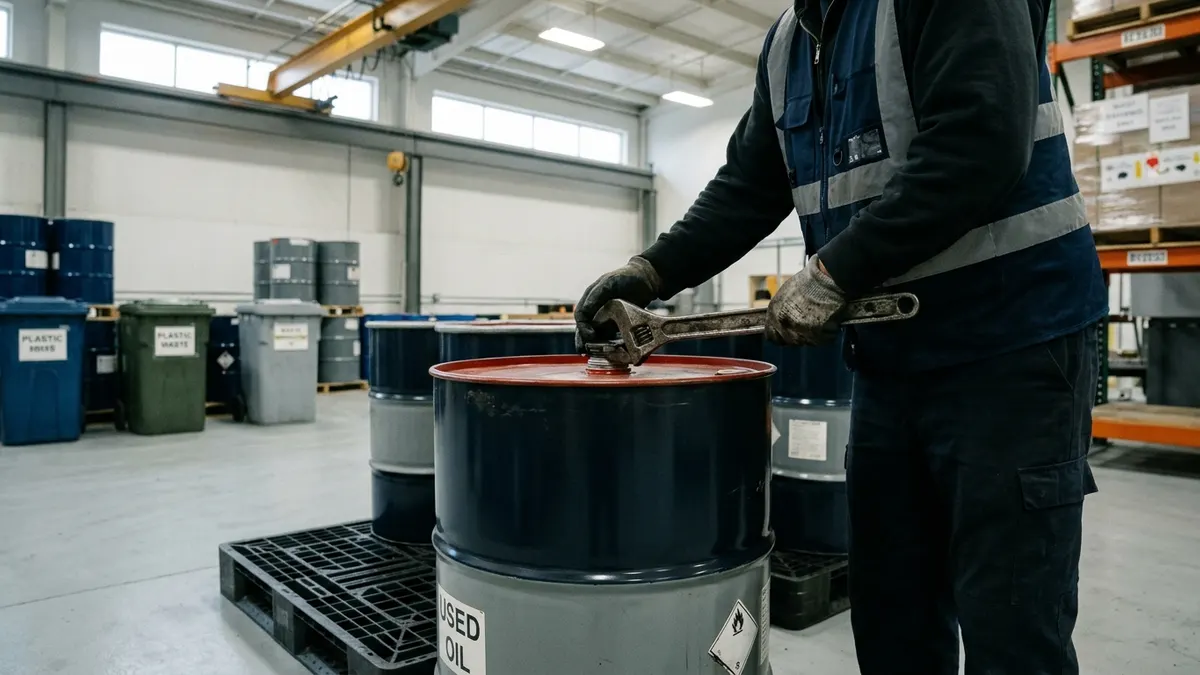
Where an activity needs a provincial approval, confirm that operations match its conditions; the Ontario page on environmental compliance approvals explains when one is required. Contractors who haul waste, service equipment or work on site must also be controlled, so check that selection, instructions and records for outsourced processes exist.
Important: An outsourced process remains inside the management system. If a contractor hauls the plant's waste, the plant still needs to show how it confirmed the contractor was qualified to do so.
8. Emergency Preparedness and Industrial Spill Response (Clause 8.2)
The plant must identify potential emergencies, such as a hydraulic line failure, a fire, a chemical release or a storm drain spill, and plan how to respond. The plan has to be tested where practical and reviewed after any real event.
Verify that spill kits are stocked, drain covers are accessible and call lists are current. Drill records matter as much as the written plan, because an auditor will ask what happened the last time the plan was practiced.
9. Environmental Performance Monitoring and Internal Audit (Clauses 9.1 - 9.2)
Decide what to measure, how, how often and who analyzes the results. Typical measures include energy and water use, waste quantities by stream, discharge sampling results and the status of legal compliance evaluations. Plants that emit or transfer listed substances may also owe reports to the federal National Pollutant Release Inventory.
Internal audits need a program, defined criteria and auditors who are independent of the area they audit. Findings should lead to corrective action with evidence of closure, not just a note in a log.
10. Management Review and Continual Improvement Workflow (Clauses 9.3 and 10.2)
Top management reviews the system at planned intervals, using inputs such as audit results, compliance status, objective progress, complaints and changes in context. The output should include decisions on improvement, resources and any change needed to the system.
Check that the minutes record actual decisions and that nonconformities from audits or incidents flow through to corrective action. A review that only restates the agenda tells an auditor that management is not steering the system.
Quick-Reference Summary
| Check | What to verify | Typical evidence |
|---|---|---|
| Context and scope | Boundaries cover all sites and activities | Scope statement, issues list |
| Policy and leadership | Commitments and roles are live | Signed policy, role assignments |
| Aspects | Significance method is repeatable | Aspects register with criteria |
| Legal obligations | Each item has an owner | Register with review dates |
| Objectives | Measurable, owned, scheduled | Objective plans, progress data |
| Competence | Training matches risk | Training records |
| Operational controls | Controls match approvals | Procedures, inspection logs |
| Emergencies | Plan tested and kitted | Drill records, spill kit checks |
| Monitoring and audit | Data reviewed, findings closed | Monitoring logs, audit reports |
| Management review | Decisions recorded | Review minutes |
Frequently Asked Questions
What are the mandatory documents required for an ISO 14001 requirements checklist?
The standard asks for documented information on the scope, the environmental policy, objectives, evidence of competence, operational controls the plant needs, monitoring results, internal audit results, management review results and corrective action. The plant decides how much additional documentation it needs to run the system effectively.
How often should an industrial facility update its ISO 14001 legal compliance register?
The standard does not set a fixed interval. A common approach is to review it on a regular schedule, such as quarterly, and also whenever a regulation changes, a new process starts or an approval is amended.
Can an existing ISO 9001 quality system be integrated with ISO 14001 requirements?
Yes. An existing quality management system under ISO 9001:2026—acknowledging that many certified organizations are still on the 2015 edition during the transition—shares core mechanisms with ISO 14001. Document control, internal audit, corrective action and management review are shared mechanisms, so many plants run one process for both standards. Only the environmental content, such as aspects, legal obligations and emergency planning, needs to be added.
What is considered a significant environmental aspect under ISO 14001:2015?
It is an aspect that has, or can have, a notable impact on the environment according to criteria the plant defines. Typical criteria include the scale of the impact, its severity, how often it happens and whether a legal requirement applies.
How long does it take for a manufacturing plant to meet all ISO 14001 requirements?
It depends on the size of the plant and the state of its existing systems. A typical estimate for a small or mid-sized plant with an established quality system is several months, with legal register work and operational controls taking the longest.
Plants that work through these ten checks before the registrar arrives tend to find their own gaps first, which is the point of the exercise. To see how the standard applies to your own operation, read about ISO consulting for manufacturing or try the free ISO readiness assessment. If you would rather talk it through with someone who has seen these audits from the floor, book a consultation with ISO Certification Consultants.