ISO consulting for Automotive
Tier 1 and Tier 2 suppliers meeting IATF 16949 and the core tools their OEM customers demand.
Automotive suppliers in Canada that make production or service parts are typically required to hold IATF 16949:2016, the automotive quality management standard their OEM and Tier 1 customers write into purchase terms. It is applied together with ISO 9001 and each customer's own customer-specific requirements, and some customers also expect ISO 14001.
For a supplier in Ontario's automotive supply base, the certificate is only the entry ticket. Customers watch delivery and quality performance on their scorecards, expect a complete PPAP before parts ship, and can escalate a supplier with repeat problems to tighter containment. The quality system has to produce the same evidence a customer's supplier quality engineer will ask for, not just what a registrar checks once a year.
IATF 16949:2016 is written as a supplement to ISO 9001:2015 and remains the valid standard. IATF has announced a second edition in development, but it has not been published. With ISO 9001:2026 now published, confirm with your certification body how its transition affects your audit cycle.
The pressures you are under
Automotive operations face requirements that generic consultants miss. Each one below names the module in the compliance management software that answers it.
OEM customers require IATF 16949 and full core-tool evidence.
Supplier Quality: PFMEA, Process Flow and Control Plan kept linked, so a change in one is visible in the others.
PPAP submissions and APQP timing cannot slip.
Supplier Quality: APQP, PPAP and FAI tracked per supplier and part, answered through the portal task inbox.
Supplier corrective actions drag on by email.
Improvements: A SCAR raised from the nonconformance and answered by the supplier in the portal, with the full record kept.
Standards we implement here
Many automotive clients integrate two or three standards into a single management system rather than running them in parallel.
What does IATF 16949 require beyond ISO 9001?
IATF 16949 does not repeat ISO 9001; it adds automotive requirements on top of it, so an automotive supplier meets both sets at once. The additions below are where suppliers moving from ISO 9001 usually find the most new work. The IATF 16949 consulting service covers each of them.
Customer-specific requirements
Clause 4.3.2 of IATF 16949:2016 requires you to evaluate each customer's specific requirements and include them in the scope of your quality management system. A requirement in a customer's published document is as binding as one in the standard.
The core tools
APQP, PPAP, FMEA, MSA and SPC are how product and process risk is planned, approved, measured and controlled. Auditors expect the PFMEA, Process Flow and Control Plan to agree with each other and with what happens at the machine.
Process and product audits
Beyond the system audit, the standard requires manufacturing process audits (clause 9.2.2.3) and product audits (clause 9.2.2.4). Many customers expect these to be supported by layered process audits on the floor.
Error-proofing and problem solving
The standard expects a documented problem-solving method and error-proofing devices that are tested so they do not fail silently. Recurring defects are treated as a sign that the root cause was never found.
Supplier development
You are expected to develop your own suppliers' quality systems toward certification and to monitor their performance. Purchased material is part of your product, and the customer holds you responsible for it.
What do IATF auditors look for in an automotive plant?
IATF audits follow the process approach, and they often start from the customer's point of view. Expect the auditor to ask for customer scorecards, complaints and any special status a customer has placed on the site, then trace those problems into the processes that should have prevented them.
From there, the trail runs through the core tools. If a customer complaint was closed, was the PFMEA updated and the Control Plan changed? Are the gauges listed in the Control Plan covered by a measurement system analysis? When an SPC chart goes out of control, does the operator follow the reaction plan, and is that reaction recorded? Is the approved PPAP still valid after the last process change? Each of those questions has a record behind it, and the auditor will ask to see it.
A frequent weakness is a gap between the documents and the floor. A Control Plan that lists a check the operator does not perform, or a PFMEA that has not changed since launch, tells the auditor that the system is maintained for the audit rather than for production. Holding the three documents together, as the Supplier Quality module does, keeps a change to one from going unnoticed in the others.
How do automotive suppliers get started with IATF 16949?
Start with a gap analysis against three sources at once: IATF 16949, the ISO 9001 requirements it builds on, and the customer-specific requirements of every automotive customer you ship to. Building a matrix of each customer's requirements early avoids discovering one during the audit.
Define the scope next. The certificate covers manufacturing sites, and support functions at other locations that serve the plant, such as engineering or purchasing, need to be addressed in the audit plan. Your certification body must be recognized by IATF, so confirm that before signing a contract.
An IATF 16949 project typically takes longer than an ISO 9001 project, because core-tool records and process audits have to be running and producing evidence before the certification audit. If a customer also expects ISO 14001 environmental management, building it into the same management system now costs less than adding it later.
Illustrative example: A Tier 2 stamping supplier with ISO 9001 wins its first direct business with a Tier 1 customer that requires IATF 16949. The gap analysis shows the system is sound, but the PFMEAs are generic, MSA covers only some gauges, and nobody owns the customer requirements. Those three gaps become the project plan.
Automotive questions, answered
Is IATF 16949 mandatory for automotive suppliers in Canada?
IATF 16949 is not a legal requirement; it is a customer requirement. OEMs and Tier 1 suppliers commonly require it of suppliers that make production or service parts, and they write it into purchase terms. Suppliers of other goods and services, such as some tooling or logistics providers, may be asked for ISO 9001 instead. Your customer's purchase terms and customer-specific requirements decide which applies.
What are the automotive core tools?
The core tools are APQP (Advanced Product Quality Planning), PPAP (Production Part Approval Process), FMEA (Failure Mode and Effects Analysis), MSA (Measurement System Analysis) and SPC (Statistical Process Control). AIAG publishes reference manuals for them, and FMEA is also covered by the AIAG and VDA FMEA Handbook. IATF 16949 expects them to be applied, and customers may specify which manual or method to follow.
What are customer-specific requirements in IATF 16949?
Customer-specific requirements are additional requirements that each automotive customer publishes on top of IATF 16949, such as rules for PPAP submissions, layered process audits or escalation. Clause 4.3.2 of IATF 16949:2016 requires you to evaluate them and include them in your quality management system. Because they are updated, you need a process to check for new versions and act on the changes.
How long does IATF 16949 certification take?
For a single-site supplier that already holds ISO 9001, IATF 16949 certification typically takes longer than the original ISO 9001 project, because the core tools and process audits need time to produce evidence. A supplier starting without any certified system should expect a longer timeline still. A gap analysis gives a realistic estimate for your site, based on what is already in place.
Does an automotive supplier need ISO 9001 certification before IATF 16949?
No. IATF 16949 includes the ISO 9001 requirements by reference, so a supplier can certify to IATF 16949 directly without first holding an ISO 9001 certificate. Some suppliers do certify to ISO 9001 first as a stepping stone while they build core-tool capability. The free readiness check helps you see which route fits your current system.
Articles on Automotive
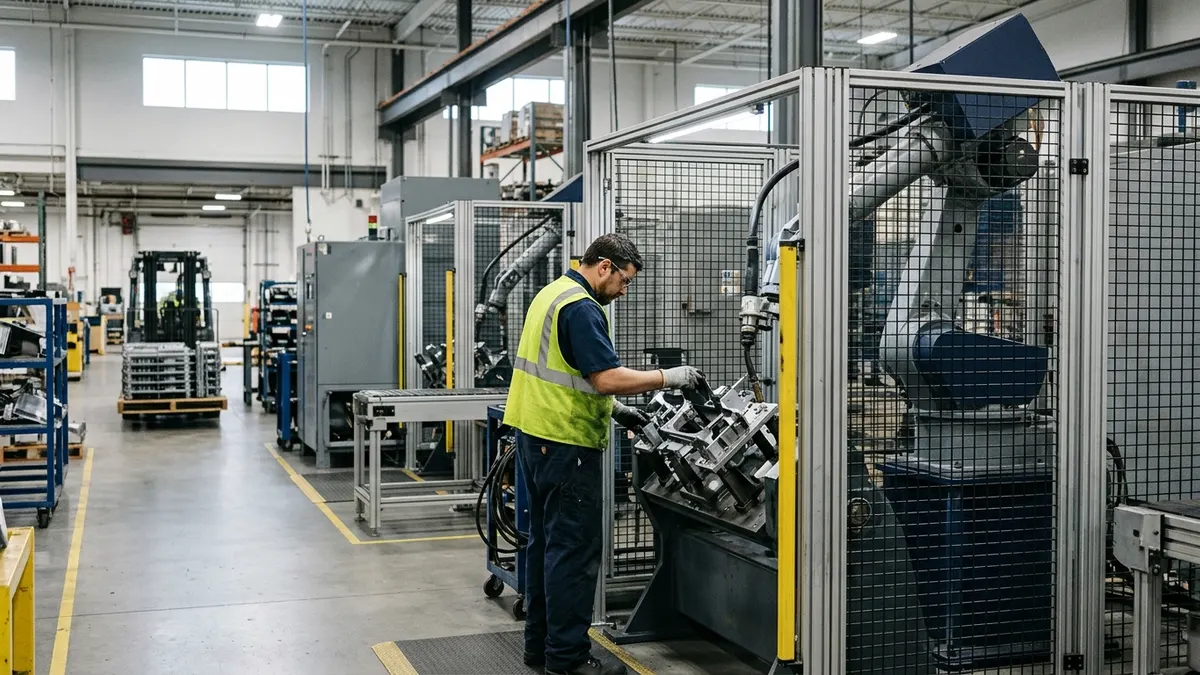
What IATF 16949 Certification Demands of Windsor Automotive Parts Suppliers
Explore critical challenges and roadmap requirements for IATF 16949 certification in Windsor, helping automotive suppliers satisfy OEM customer mandates.
·11 min read
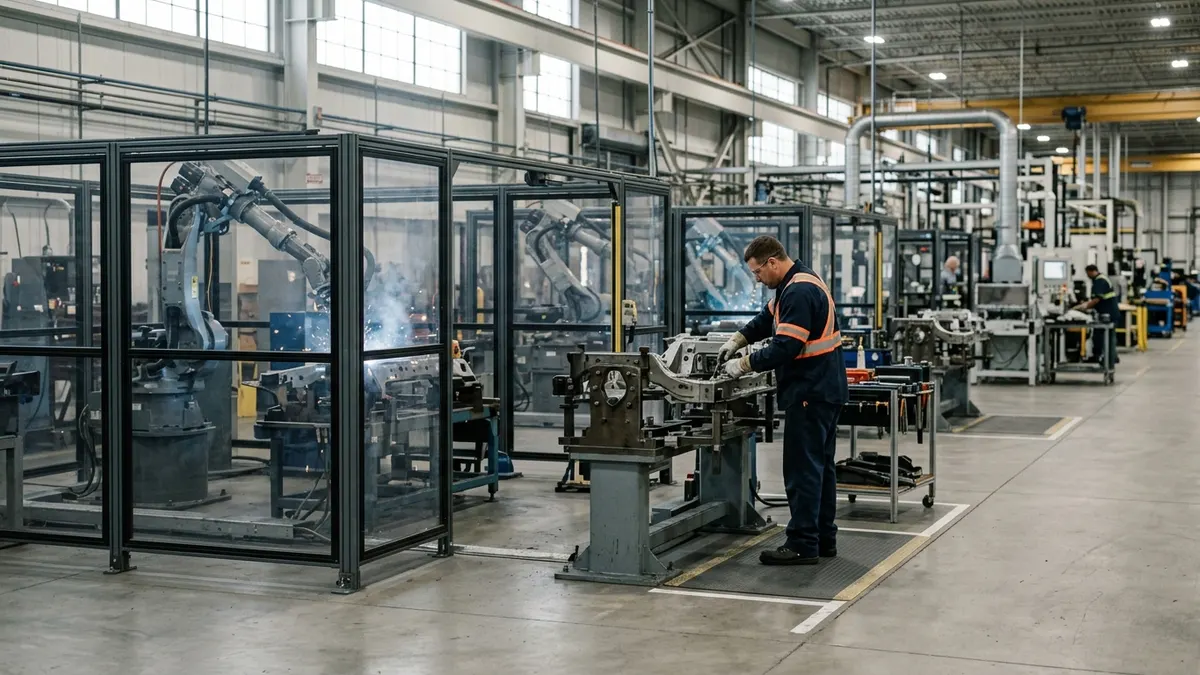
The Quality Engineer's Playbook for IATF 16949 Core Tools: APQP, PPAP, and FMEA
Master IATF 16949 core tools like APQP, PPAP, and FMEA to satisfy Tier-1 OEM expectations and prevent costly product launch defects.
·11 min read

What IATF 16949 Customer Specific Requirements Demand from Ontario Automotive Suppliers
Understand how IATF 16949 customer specific requirements impact Ontario auto suppliers. Master OEM matrices, compliance audits, and Tier-2 supplier flowdown.
·11 min read

Further reading
Anthony Mannella writes about quality management for Canadian Metalworking.
Software modules used in automotive
Other industries we serve
Get your automotive operation certified
Tell us about your operation and what you're certifying for. You'll get a clear, honest read on scope and timeline from a certified lead consultant.
We reply within one business day