Key Takeaways
- IATF 16949 certification in Windsor is driven less by the standard itself than by what Detroit Three and EV program customers add on top of it.
- A plant that already holds ISO 9001 still has real work ahead, because IATF 16949:2016 adds requirements for the core tools, special characteristics, contingency planning and layered process audits.
- Customer-specific requirements are part of the audit scope, so they need an owner, a register and a review routine.
- Cross-border logistics risk belongs in the contingency plan the standard requires, not in a separate document nobody reads.
- Stage 1 and Stage 2 audits go smoothly when the plant can show a working system with production records, not a freshly written one.
Windsor suppliers rarely decide on their own to pursue IATF 16949 certification. The request usually arrives in a supplier letter or a sourcing meeting, and it comes with a deadline set by someone else's program launch. That changes how the project should be planned: the goal is a system the plant can run every day, with a certificate as the by-product.
IATF 16949:2016 is the current edition, and IATF has announced a second edition in development that has not been published. The 2016 text remains the valid standard for every audit today. It sits on top of ISO 9001 and adds the automotive requirements that customers expect from their supply base. The service page on IATF 16949 automotive quality describes how that fits with the rest of a plant's management system.
The Windsor-Essex Automotive Corridor and OEM Supplier Mandates
Windsor sits across the river from Detroit, and that single fact shapes the quality system of almost every automotive plant in the region. Parts move across the border in tight sequences, programs are launched by customers on both sides, and a supplier in Essex County is often judged by the same scorecards as a supplier in Michigan.
Several kinds of operations make up the local supply base:
- Tooling and die shops build and maintain the tools that stamping and molding plants depend on, so their dimensional records feed directly into a customer's launch.
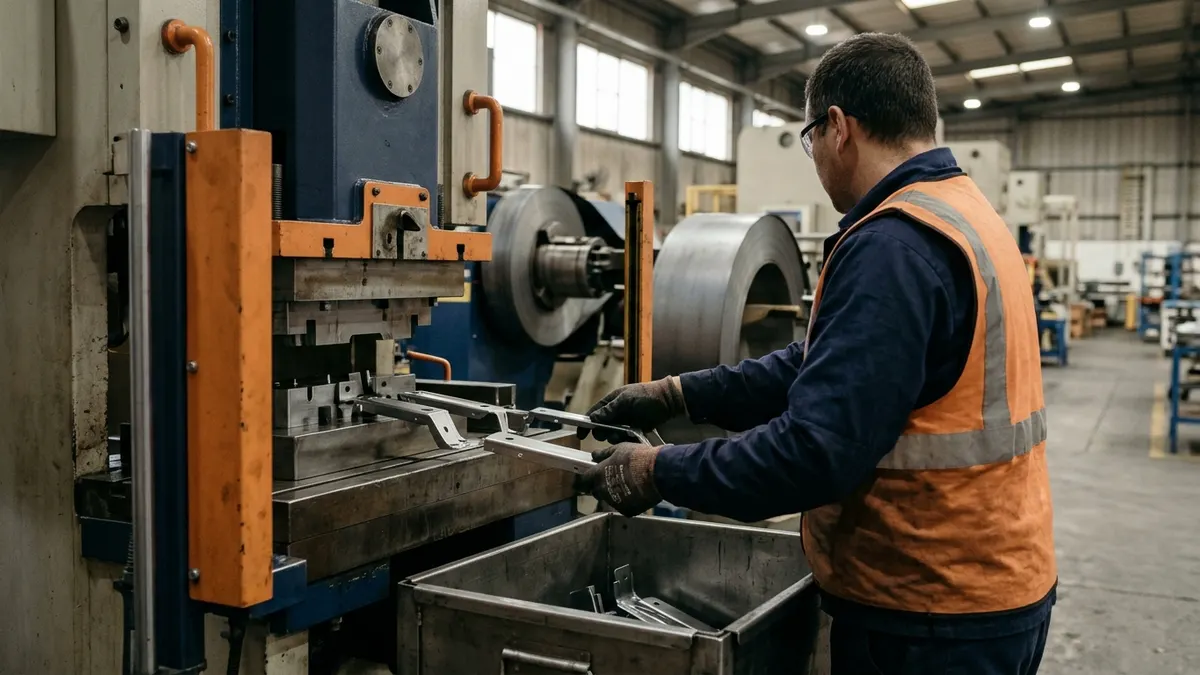
- Stamping and fabrication plants turn coil into brackets, structural parts and assemblies, usually with strict dimensional and weld requirements.
- Machining and casting operations produce powertrain and chassis components where traceability and gauge control carry heavy weight.
- Sub-tier suppliers provide fasteners, coatings and heat treatment, and they are asked to meet the same expectations through their own customers.
The Automotive Parts Manufacturers' Association represents Canadian suppliers in this sector and is a useful place to see how the industry talks about customer expectations. For a plant in this position, the practical question is not whether a customer will ask for certification but how much of the work can be finished before the request becomes a deadline.
Important: IATF 16949 certification is granted by an IATF-recognized certification body, not by a customer or a consultant. The rules that certification bodies follow are published by IATF, so the plant should read them early.
Core Friction Points When Transitioning from ISO 9001 in Tooling and Stamping
Plants that hold ISO 9001 often assume the jump is small. Many find the first gaps in the same places, which makes them easy to plan for.
Many ISO 9001 systems work at the level of procedures and records. IATF 16949 asks for evidence that the system works at the level of the process. Each manufacturing process needs defined inputs, outputs, measures and an owner, and the plant has to show that those measures are reviewed and acted on. If you want a neutral description of what the base standard involves, ISO's own explanation of ISO 9001 sets out who uses it and what certification means. ISO 9001:2026 is now the current edition, and many certified organizations are still on the 2015 edition during the transition.
Tooling and stamping operations tend to meet the same friction points:
- Special characteristics need a clear path from design to the floor. The plant has to carry customer-designated characteristics through the control plan, the work instruction and the gauge, so an operator can see what matters and why.
- Tool and die management is audited as a process in its own right, including ownership of customer tooling, preventive maintenance and repair records.
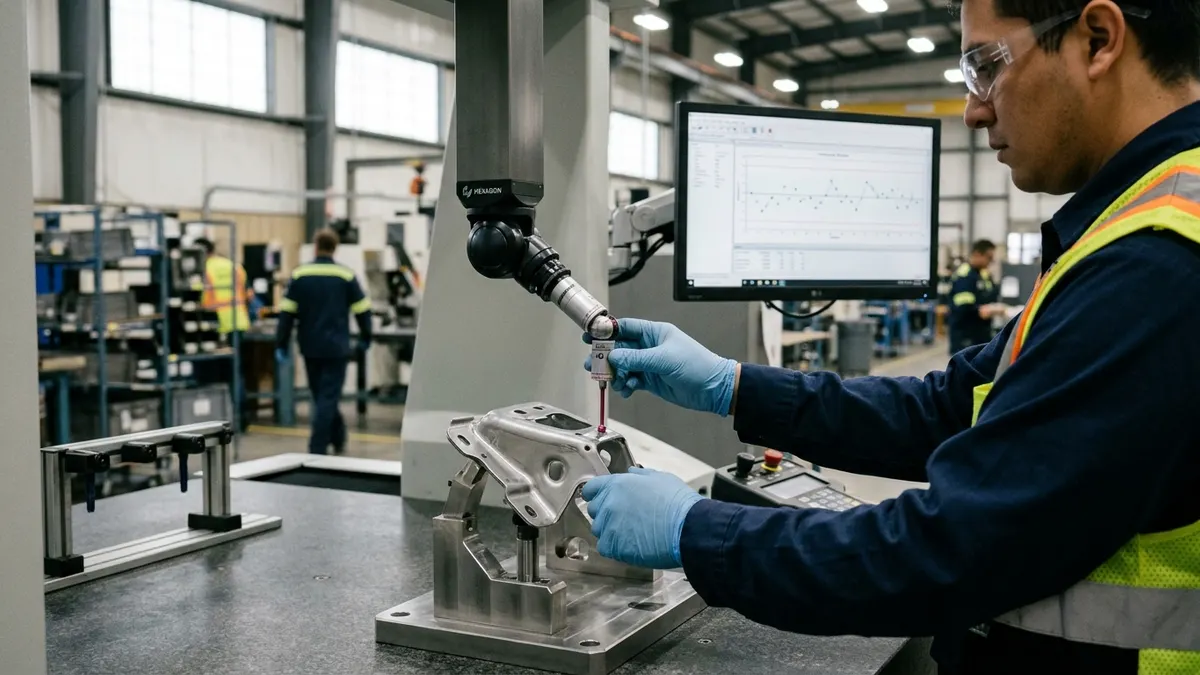
- Measurement system analysis applies to the gauges that actually release product, not only to the ones in the metrology room.
- Problem solving has to show root cause and systemic corrective action, so a finding is closed by changing the process rather than reminding the operator.
- Internal auditors need demonstrated competence, and the audit program has to cover the quality system, each manufacturing process and the product itself.
Illustrative example: A 60-person stamping plant in Windsor holds ISO 9001 and receives a request from a Tier 1 customer to certify to IATF 16949. The quality manager maps the plant's processes and finds that the control plans exist for most parts but were never linked to the process failure mode and effects analysis. Closing that gap before the audit takes longer than writing any new procedure, because it requires engineering time from people who are also running launches.
Working Through Customer-Specific Requirements for Detroit Three and EV Programs
Clause 4.3.2 of IATF 16949:2016 requires the plant to evaluate customer-specific requirements and include them in the scope of its quality system. In practice, that means the certification body will ask to see them, and the plant needs to show that they are known, current and applied.
Customer-specific requirements come from the customer, not from IATF, so the plant should always work from the current version on the customer's own supplier portal. The Detroit Three each publish their own documents, and EV program customers are adding requirements around traceability, battery component handling and software-related controls as their programs mature. For a deeper look at how these documents play out in practice, read the article on what IATF 16949 customer-specific requirements demand from Ontario automotive suppliers.
A workable approach keeps the requirements manageable:
- List every automotive customer the plant ships to, including indirect ones reached through a Tier 1.
- Record where each customer publishes its requirements and who at the plant checks for updates.
- Map each requirement to the process, the procedure or the record that satisfies it.
- Review the register at management review and after every customer scorecard or complaint.
Key Consideration: A customer-specific requirement that lives only in one engineer's inbox is a finding waiting to happen. Give the register a single owner and a review date, and the audit conversation becomes much shorter.
Embedding Automotive Core Tools into Day-to-Day Plant Operations
The core tools are published by the Automotive Industry Action Group: advanced product quality planning, the production part approval process, failure mode and effects analysis, measurement system analysis and statistical process control. Plants often treat them as launch paperwork. Auditors look for the opposite, which is evidence that the tools drive decisions after launch.
A few habits separate a working system from a binder:
- The failure mode and effects analysis is reopened when a complaint, a scrap trend or a process change shows that the original ratings were wrong.
- The control plan changes whenever the process changes, and the revision history shows why.
- Statistical process control charts have an owner who reacts to signals, and the reaction plan on the control plan matches what operators actually do.
- Measurement studies are repeated when a gauge is repaired, replaced or moved to a new application.
The article on the quality engineer's playbook for IATF 16949 core tools walks through how these tools connect, and it is a good companion for the team doing the gap work.
Contingency Planning and Risk Management for Cross-Border Logistics
Clause 6.1.2.3 of IATF 16949:2016 requires contingency plans that cover the plant's ability to keep supplying the customer when something interrupts normal operation. The text names examples such as key equipment failure, interruption from externally provided products, recurring natural disasters, fire, utility interruption and labor shortages. It also requires the plans to be tested and reviewed.
For a Windsor plant, the border crossing and the carriers that use it are part of the risk picture. A plan that ignores crossing delays, a carrier failure or a change in customs procedure is incomplete for this location, even if every line in the standard is technically addressed.
A useful contingency plan for cross-border supply answers practical questions:
- Which parts have no alternate source or tool, and what is the plant's safety stock position for those parts?
- Which carriers and brokers move the product, and who calls whom when a shipment is held?
- What does the customer expect to hear, and how quickly, if a delivery is at risk?
- Which tools, gauges and spare parts would take longest to replace, and where are they stored?
Illustrative example: A machining shop near Windsor ships components to an assembly plant on the US side. During its internal audit, the team notices that the contingency plan covers a press failure but says nothing about a delayed truck at the border. The shop adds a short section naming the alternate carrier, the buffer stock location and the customer contact, then tests it with a tabletop exercise and records the result.
A Structured Roadmap for Windsor Plants Approaching Stage 1 and Stage 2 Audits
Plants ask how long the project takes, and the honest answer depends on the starting point. A shop with a healthy ISO 9001 system and good process discipline may need roughly nine to fifteen months, while a plant starting with weaker records may need longer. These are typical estimates, not promises, and the timeline is usually set by how quickly the system produces enough operating records for an auditor to examine.
Instead of listing every stage again, think about the roadmap as three overlapping streams of work:
- Gap assessment first. Compare the current system with IATF 16949:2016 and with each customer's requirements, then rank the gaps by effort and by audit risk.
- Operate the system before the audit. Run internal audits, hold a management review, close corrective actions and collect the records that show the system working.
- Confirm eligibility with the certification body. The rules require the site to show it produces automotive parts, so the registrar will want to see evidence of production history and customer relationships.
The Stage 1 audit reviews the plant's readiness, its scope, its documented system and its understanding of the requirements. The Stage 2 audit then looks for evidence that the system is implemented and effective on the floor and across shifts. The IATF Global Oversight site is where the rules and sanctioned interpretations are published, and the plant's quality lead should read the current rules before scheduling.
Did You Know? IATF 16949:2016 is built on the ISO 9001 structure and adds automotive-specific requirements, so a plant that already has a clean ISO 9001 system carries much of the groundwork into the new project.
A plant that wants to see where it stands can begin with the free ISO readiness assessment, then plan the audit calendar around what the gap review finds.
Frequently Asked Questions
How long does it take for a Windsor auto parts plant to achieve IATF 16949 certification?
A typical range is nine to eighteen months from the first gap assessment to the certificate, depending on the starting point. The system has to operate long enough to produce internal audit results, a management review and closed corrective actions before the Stage 2 audit.
Can an automotive machine shop in Windsor get IATF 16949 without prior ISO 9001 certification?
Yes, because IATF 16949 incorporates the ISO 9001 requirements and does not require a separate ISO 9001 certificate first. A shop starting without ISO 9001 should expect a longer project, since it builds the base system and the automotive additions together.
What are the most common nonconformances during IATF 16949 audits in Ontario manufacturing?
Findings often cluster around control plans that do not match the process, measurement system studies that are missing or out of date, weak root cause analysis in corrective actions, and customer-specific requirements that are not tracked. Internal audit programs that skip manufacturing processes or product audits also draw attention.
How does IATF 16949 address supply chain disruptions between Windsor and Detroit?
Clause 6.1.2.3 of IATF 16949:2016 requires contingency plans that cover interruptions to supply, equipment, utilities and labor, and the plans must be tested and reviewed. A cross-border plant should write the border, carriers and brokers into that plan.
What evidence of automotive production history is required before scheduling an audit?
The certification body confirms that the site manufactures automotive production or service parts for customers, so expect to show customer purchase orders, part approval records and shipment history. The exact evidence is set out in the IATF rules and confirmed by the chosen registrar.
Plants in the region that want a clear plan for IATF 16949 can compare their current system with the standard and their customers' requirements before committing to a schedule. ISO Certification Consultants work with Ontario manufacturers on that gap review and on building the records an auditor expects, and you can book a consultation to talk through the starting point.