Key Takeaways
- IATF 16949:2016 is written for automotive production sites, yet a purchase order from a Tier 1 buyer is often what pulls a Tier 2 shop into the same quality expectations.
- Clause 8.4.2.3 of IATF 16949:2016 describes how a supplier's own quality system is expected to develop, starting with ISO 9001:2026 and moving toward the minimum automotive requirements.
- The five Core Tools (APQP, PPAP, FMEA, MSA and SPC) show up in sub-tier plants through the customer's requirements, not through a separate rulebook.
- Customer-specific requirements differ from one buyer to the next, so a single controlled register saves more time than any single procedure.
- A realistic roadmap starts with reading the purchase order, not with booking an audit.
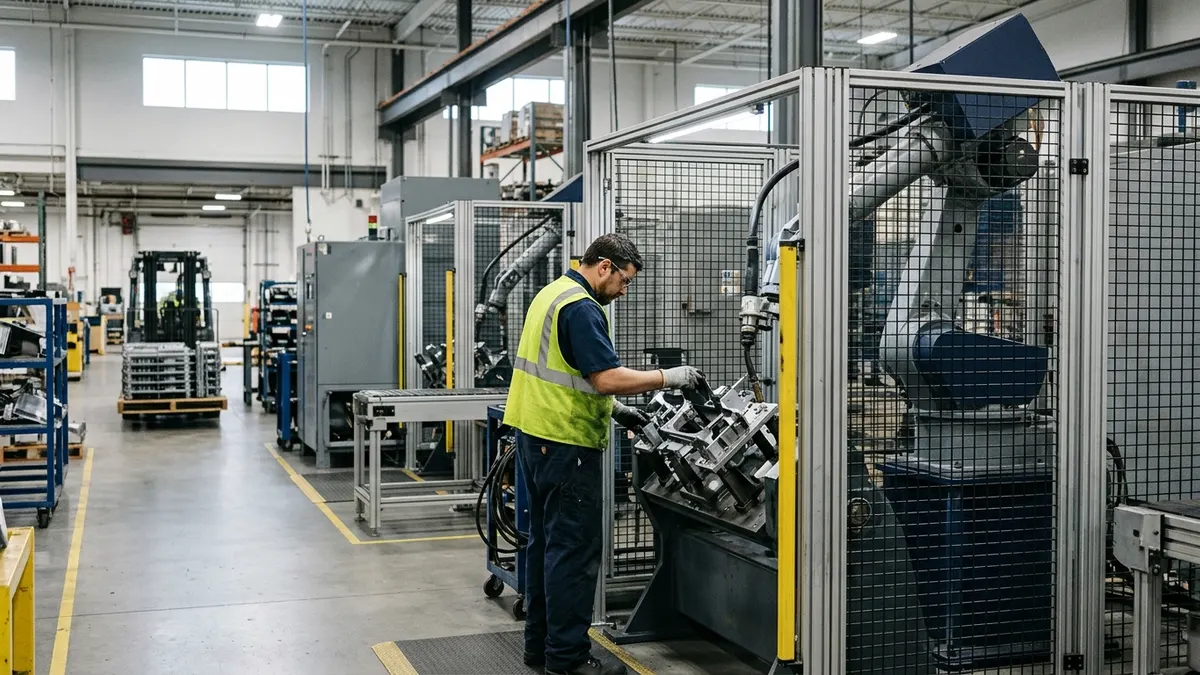
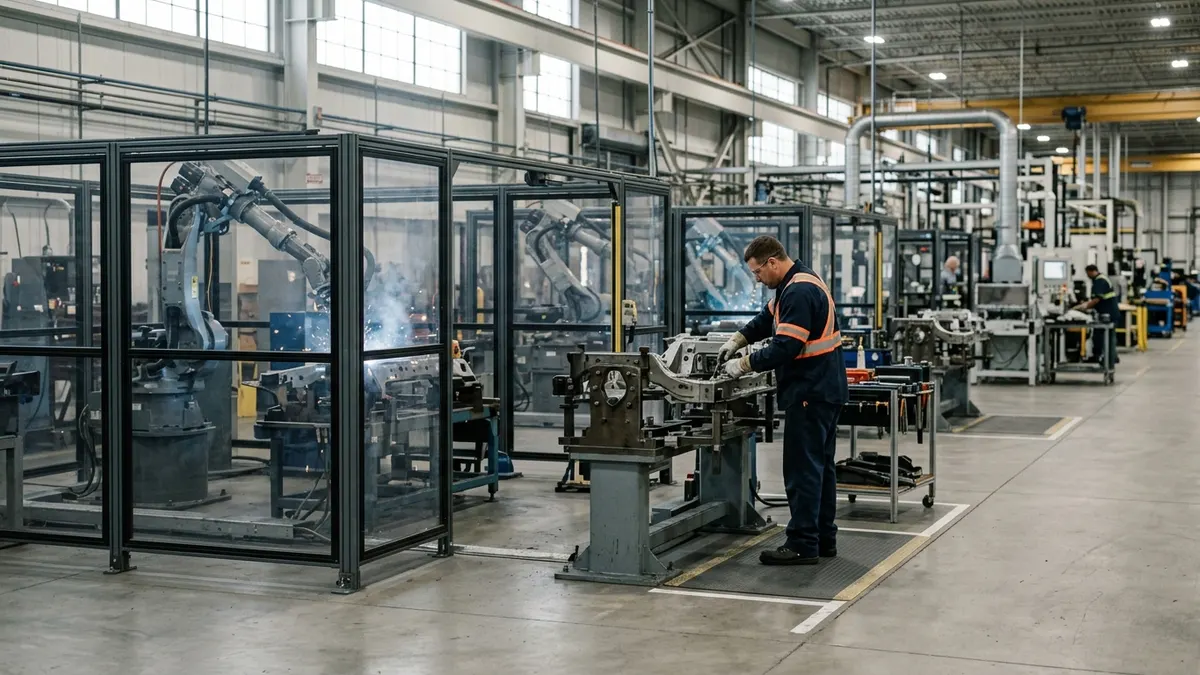
The IATF 16949 requirements that tier 2 suppliers face rarely arrive as a certificate demand. They arrive as a line in a supplier manual, a PPAP request on a new part number, or a Tier 1 buyer asking when the shop plans to move beyond ISO 9001. A machine shop in Ontario that cuts brackets, shafts or housings for an automotive chain can go years without hearing the words "IATF 16949", and then hear them three times in a quarter.
This article explains what the standard asks of sub-tier plants, where the real obligations come from, and how shops of different sizes approach the work. It does not replace the customer's own documents, which always have the final word on what a specific buyer expects.
The Squeeze on Tier 2: Why OEMs and Tier 1s Mandate IATF 16949
An automaker holds its Tier 1 suppliers responsible for the quality of everything inside the assembly, including parts made two steps further down the chain. A Tier 1 plant that ships a seat frame, a brake component or a steering sub-assembly is expected to show that its own suppliers are controlled. Clause 8.4 of IATF 16949:2016 puts that expectation in writing: the organization must keep control over externally provided processes, products and services.
That pressure moves downhill. A Tier 1 purchasing team that has to prove supplier control to its customer will ask its own sub-tier suppliers for evidence, and the evidence it prefers is a recognized quality system backed by a third-party certificate. Sub-tier shops feel this as a mix of requests rather than one rule.
Three pressures tend to arrive together:
- Customer questionnaires and supplier manuals that ask about the controls a shop has in place for traceability, gauging and corrective action.
- Source approval for each new part, where a Tier 1 buyer requests a PPAP submission before releasing production tooling or volume.
- Second-party audits, where a customer sends its own auditor to look at the process rather than relying on paper.
The IATF 16949 automotive quality service page lays out how a shop can approach the standard in stages. The point to take from the pressure above is simpler: the work is demanded by the supply chain first, and written down in the standard second.
MAQMSR vs. Full Certification: Deciphering Clause 8.4.2.3
Clause 8.4.2.3 of IATF 16949:2016 is titled "Supplier quality management system development". It tells an automotive production organization to require its suppliers to develop, implement and improve a quality system with the goal of compliance to IATF 16949. It also describes a path: the first step is typically conformity to ISO 9001, and the next step is conformity to the Minimum Automotive Quality Management System Requirements for Sub-Tier Suppliers, usually shortened to MAQMSR.
The path matters because it shows that the standard itself does not expect every sub-tier shop to jump straight to full certification. A supplier on that path is expected to keep improving toward the full standard over time, at a pace the customer sets.
Important: Full IATF 16949:2016 certification is awarded only to sites that meet the scope rules set by IATF Global Oversight. A pure machining shop that never ships directly to an automaker's production line may find the certification body treats it differently than a Tier 1 plant, so the scheme rules and the customer's wishes should both be read before the scope is decided.
The IATF Global Oversight site is the authority for rules and sanctioned interpretations. Anything a consultant, registrar or buyer says about eligibility should be checked there.
What MAQMSR looks like in practice
MAQMSR is not a separate certificate that a shop buys. It is a defined set of automotive requirements layered on top of ISO 9001, and a customer may ask a supplier to demonstrate it through a second-party audit or a self-assessment. In practice, shops describe it as "ISO 9001 plus the automotive items the buyer cares about most", such as product approval, control plans, measurement system analysis and error-proofing.
Many certified organizations are still on the 2015 edition of ISO 9001 during the transition to ISO 9001:2026, which was published on 16 September 2026. Certificates to ISO 9001:2015 remain valid until the transition ends in September 2029, so a shop starting this path today should confirm with its registrar which edition the audit will use.
Automotive Core Tools Expectations for Sub-Tier Fabricators and Machine Shops
The Core Tools are published by the Automotive Industry Action Group and cover advanced product quality planning (APQP), the production part approval process (PPAP), failure mode and effects analysis (FMEA), measurement system analysis (MSA) and statistical process control (SPC). IATF 16949:2016 refers to them directly, and customers ask for them by name.
A sub-tier shop does not need to master every tool before the first order. It needs to know which tool the customer will ask for first, and have a working answer ready.
How each tool tends to appear
- APQP appears as a project plan for a new part, with milestones from quote review through tooling, trial runs and launch.
- PPAP appears as a submission package that proves the process can make the part to drawing, usually before volume production begins. Clause 8.3.4.4 of IATF 16949:2016 covers the product approval process.
- FMEA appears as a process risk analysis that feeds the control plan, which clause 8.5.1.1 requires to be kept for each part or family of parts.
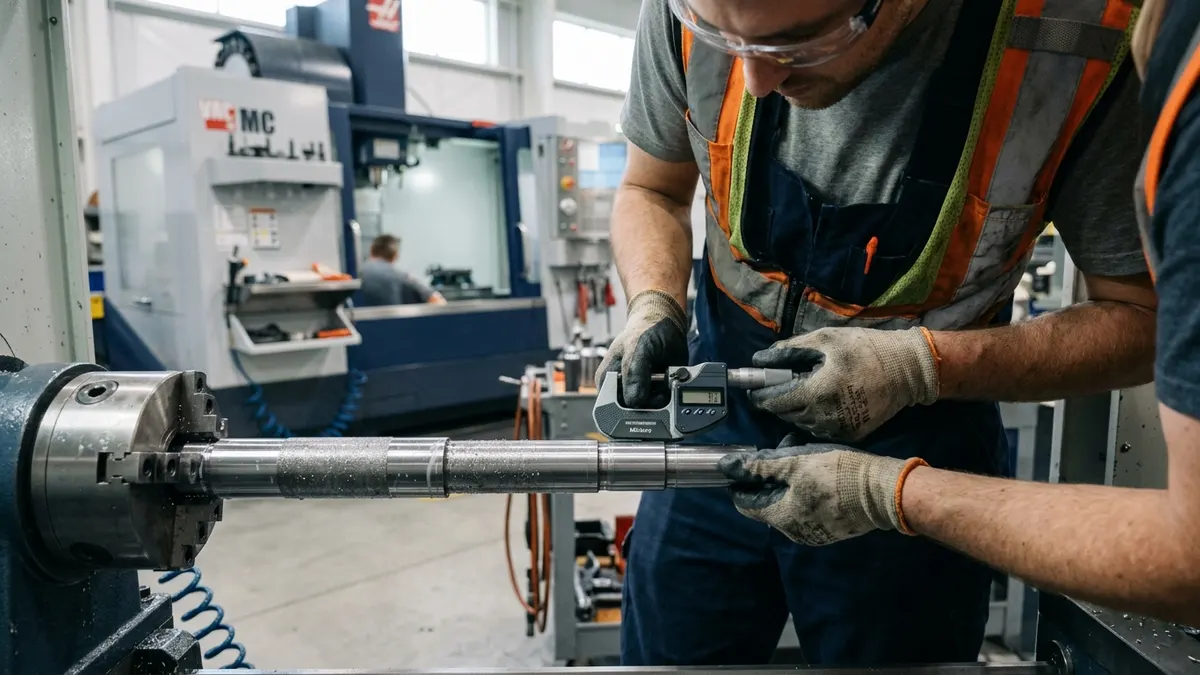
- MSA appears when a customer asks for gauge studies on key characteristics; clause 7.1.5.1.1 requires statistical studies of the measurement systems named in the control plan.
- SPC appears as control charts or capability studies on the characteristics the customer marks as special.
Key Consideration: Start with the Core Tools the customer has already asked for, and build the rest as the part mix grows. A shop that produces a clean PPAP package, a working control plan and one well-run gauge study usually earns more trust than one that owns five unused procedures.
Illustrative example: A family-owned machine shop in southwestern Ontario receives a request from a Tier 1 buyer for a PPAP submission on a new bracket. The shop has a drawing, a routing and a basic inspection plan, but no FMEA and no gauge study on the bore diameter. The team builds the process flow, writes a process FMEA with the operators who run the cell, links it to a control plan, and runs a gauge study on the bore gauge before submitting. The next request from the same buyer takes noticeably less effort because the templates already exist.
Managing Customer-Specific Requirements (CSRs) Across Multiple Tier 1 Buyers
Customer-specific requirements are the part of the work that surprises shops most. IATF 16949:2016 expects each certified site to evaluate and include them in its quality system, and a sub-tier supplier feels the same weight even without a certificate, because the requirements appear in purchase orders and supplier manuals.
Two Tier 1 buyers can ask for the same part feature to be controlled in different ways: one may call for a particular capability index on a characteristic, another for a specific reaction plan and a defined notification time when a nonconformance is found. Neither request is unreasonable, but the shop has to track both without mixing them up.
A simple way to keep CSRs under control
A single register works better than scattered notes. A practical register records the customer, the document and revision, the requirement in plain words, the process or part number it affects, the owner and the date it was last reviewed.
- List each requirement once, in plain language, and link it to the control plan or work instruction that implements it.
- Review the register on a fixed schedule and whenever a customer issues a new manual revision.
- Name one owner per customer so that a change in a supplier manual reaches the shop floor and does not sit in an inbox.
The automotive industry page shows how these requirements sit alongside the rest of the quality system. The Automotive Parts Manufacturers' Association is also a useful place for Canadian suppliers to see what the wider supplier community is dealing with.
Shop-Floor Traceability, Error-Proofing, and Layered Process Audits
Auditors from a Tier 1 customer usually spend more time on the shop floor than at a desk. Three subjects come up repeatedly, and a sub-tier plant can prepare for each without waiting for a certificate.
Traceability
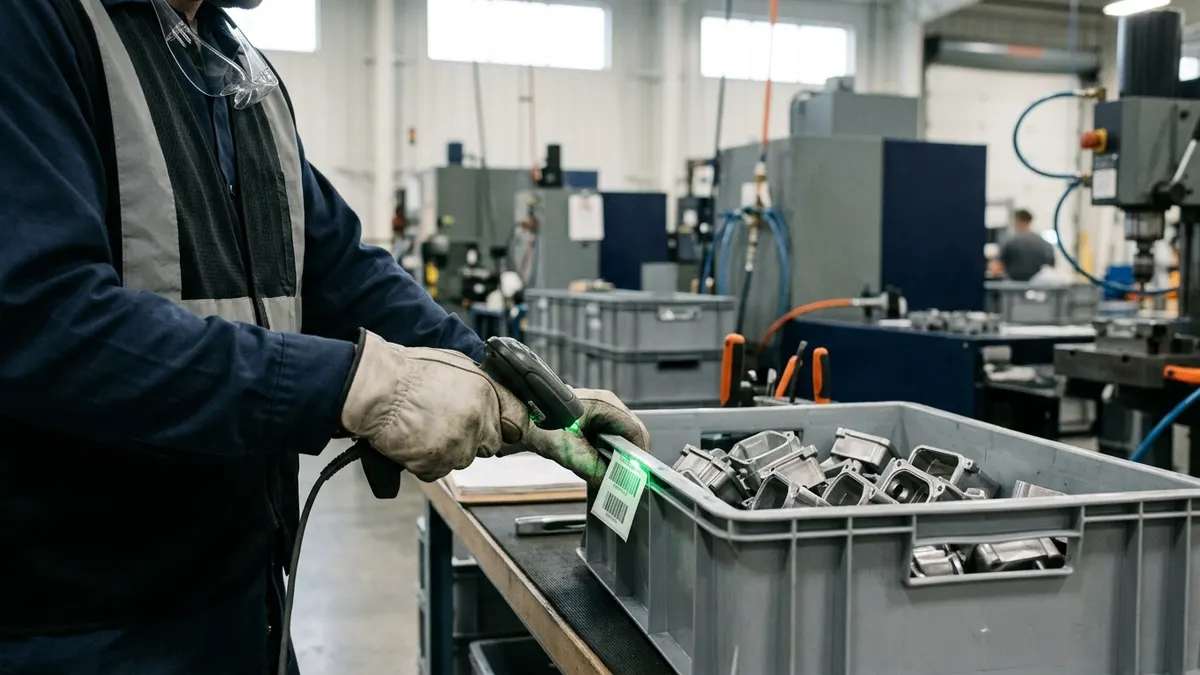
Clause 8.5.2.1 of IATF 16949:2016 covers identification and traceability. In a machine shop, that means a customer can ask which raw material heat or lot went into a given shipment, and the answer should come from records rather than memory. A common approach is to carry a lot or traveler number through every operation, from bar stock receipt to final inspection to packing.
Error-proofing
Clause 10.2.4 of IATF 16949:2016 asks the organization to use error-proofing methods in its corrective action process, and the control plan and FMEA both lead naturally to it. On a shop floor, error-proofing often looks like a fixture that will not seat a part the wrong way, a sensor that stops a machine when a feature is missing, or a gauge that accepts only good parts. The test of a good error-proofing device is that it is checked on a schedule, so the shop knows it still works.
Layered process audits
Layered process audits are short, frequent checks of a process by people at different levels of the plant, from the operator's supervisor to the plant manager. Some customer-specific requirements call for them, and clause 9.2.2.3 of IATF 16949:2016 covers manufacturing process audits in general. Even where no customer asks, many plants find that brief, scheduled floor checks catch drift in a process before it becomes a customer complaint.
Did You Know? Clause 8.4 of IATF 16949:2016 applies to the shop as a buyer too, so a sub-tier plant that purchases bar stock, heat treating or plating is expected to control those suppliers in turn. The chain of control continues all the way down.
The Supplier Quality module shows how supplier records, scorecards and corrective actions can be kept in one place for this purpose.
A Practical IATF 16949 Roadmap for Ontario Sub-Tier Suppliers
A roadmap that works for a 40-person machine shop looks different from one for a larger stamping plant, but the order of steps is similar. Time frames depend on the starting point, the part mix and how much the leadership team can free up, so any estimate is a rough guide rather than a promise.
- Read what the customers have already sent. Collect purchase orders, supplier manuals and any questionnaires, and note every requirement that goes beyond ISO 9001.
- Confirm the ISO 9001 base. If the shop is certified, check the edition and the registrar's transition plan; if not, that comes first.
- Run a gap assessment against the customer's expectations and the standard. The free ISO readiness assessment is one way to see where the largest gaps sit before anyone writes a procedure.
- Build the Core Tools around live parts. Use the real part numbers in production rather than abstract examples, so the templates are useful from the first day.
- Set up the CSR register, internal audits and management review. These records tell an auditor that the system is run, not just written.
- Decide on the target with the customer. Some buyers are satisfied with MAQMSR conformity shown through a second-party audit, while others expect full certification on a stated timeline.
Illustrative example: A regional fabricator in the Ontario automotive corridor holds ISO 9001 and supplies welded brackets to two Tier 1 plants. One buyer asks for a self-assessment against the automotive minimum requirements, and the other asks about a certification timeline. The owner decides to treat both requests as one project, builds a single gap list, and shares the plan with both buyers so each knows what to expect.
Frequently Asked Questions
Are tier 2 automotive suppliers strictly required to hold IATF 16949 certification?
No standard or law requires it on its own. The requirement comes from the customer: a Tier 1 plant or OEM decides what it expects from its sub-tier suppliers and writes that into its purchasing terms. Some buyers accept ISO 9001 with automotive controls, and others ask for a defined path toward IATF 16949.
What is MAQMSR and how does it apply to tier 2 suppliers?
MAQMSR stands for Minimum Automotive Quality Management System Requirements for Sub-Tier Suppliers. It is a set of automotive requirements that sit on top of ISO 9001 and is referenced in clause 8.4.2.3 of IATF 16949:2016 as a step on the supplier's development path. A customer may assess it through a second-party audit or self-assessment.
Which automotive Core Tools are mandatory for tier 2 component manufacturers?
The standard refers to APQP, PPAP, FMEA, MSA and SPC, and customers decide which ones they require from a given sub-tier supplier. In practice, PPAP and the control plan tend to come first, followed by FMEA and measurement system studies on key characteristics. The supplier manual or purchase order is the document to check.
Can an Ontario tier 2 supplier maintain ISO 9001 instead of full IATF 16949?
Yes, where the customer accepts it. Many sub-tier shops stay on ISO 9001 while adding the automotive controls their buyers ask for. The risk is that a buyer may later ask for a stated path toward IATF 16949, so a shop is better off asking the customer directly than assuming.
How long does it take for a precision machine shop to reach IATF 16949 readiness?
It depends on the starting point. A shop that already holds ISO 9001 and has some Core Tools in use may need many months of focused work, while a shop with limited records may need longer. A gap assessment gives a more honest estimate than any general range.
A shop that wants to turn a buyer's request into a plan does not have to work it out alone. ISO Certification Consultants work with Ontario manufacturers on exactly this sequence, from reading the customer's requirements to building the records an auditor will ask for, and the team can be reached through the consultation page.