
Key Takeaways
- HACCP is a method for controlling food safety hazards at specific process steps, while ISO 22000 is a full management system that contains HACCP inside it.
- ISO 22000 adds leadership, risk-based planning, internal audit and management review on top of the hazard analysis that HACCP already requires.
- Operational prerequisite programs give ISO 22000 a second way to control hazards where a critical control point does not fit.
- Canadian regulators ask for a preventive control plan, while many retail and food service buyers ask for a certificate that GFSI recognizes.
- A facility can start with HACCP and grow into ISO 22000 later, because the hazard analysis work carries over.
Understanding the ISO 22000 vs HACCP differences starts with one fact: the two are not rivals on the same level. HACCP is a way of finding and controlling food safety hazards. ISO 22000 is a management system standard that uses that way of working as its core and then wraps planning, resources, audits and improvement around it.
For a food plant in Ontario, the practical question is rarely which one is better. It is which one a regulator, a customer or the plant's own risk profile actually calls for today. The sections below separate what each framework covers, where they overlap and how to pick a path.
Understanding the Fundamentals: What HACCP and ISO 22000 Actually Cover
HACCP stands for Hazard Analysis and Critical Control Points. It grew out of food safety practice and was written down in the Codex Alimentarius, whose HACCP principles form the base of nearly every food safety program in use. The method asks a plant to identify hazards, decide which process steps control them, set limits, monitor, correct and verify.
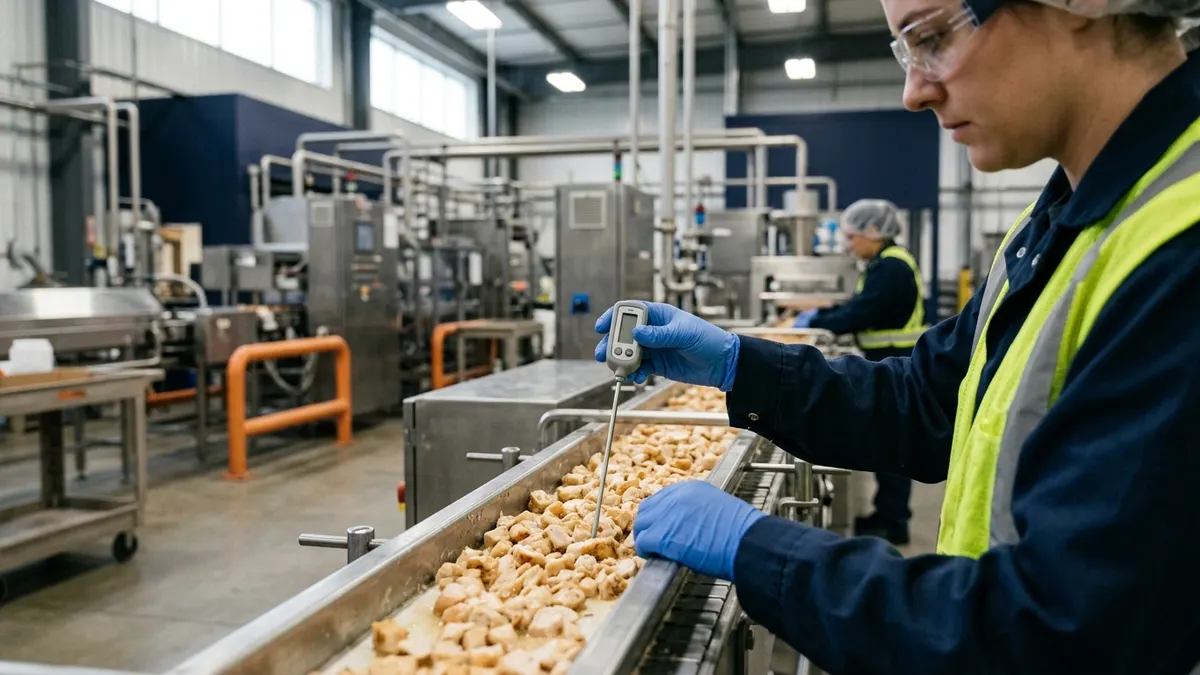
HACCP stays focused on the product and the process. It says little about who owns the system, how objectives are set, how resources are planned or how the system improves year over year. A plant can run a sound HACCP plan and still have no formal way to review it at the management level.
ISO 22000:2018 covers all of that. The official ISO page for the standard describes it as a food safety management system standard for any organization in the food chain, from farms and ingredient makers to packers, carriers and retailers. It follows the same high-level structure as ISO 9001:2026, though many certified organizations remain on the 2015 edition during the transition, so a plant that already runs a quality system will recognize the layout.
Did You Know? ISO 22000:2018 requires the hazard analysis to follow the HACCP principles, so the Codex method is built into the standard rather than replaced by it.
The short version of each
- HACCP is a process control method: it answers the question of which steps in the process must be controlled so that a hazard cannot reach the customer.
- ISO 22000 is a management system: it answers the question of how an organization plans, runs, checks and improves everything that affects food safety, including the HACCP work.
Core Structural Differences: Management Systems Versus Operational Control
The clearest structural gap sits in the clauses that have nothing to do with the production line. ISO 22000:2018 asks top management to take part: to set a food safety policy, assign responsibilities and make sure resources exist. It asks the organization to understand its context and the needs of interested parties, which brings customers, regulators and suppliers into the system on purpose.
HACCP has no such requirements. The plan can be written by a single qualified person and sit in a binder, and it will still be a HACCP plan. That is both its strength and its weakness. It is quick to set up, but it depends on individuals rather than on a system that survives staff changes.
Communication, audit and review
ISO 22000:2018 treats communication as a requirement. The plant must decide what it tells suppliers, customers and authorities, and how information moves inside the plant when a hazard or a process change comes up. The standard also requires internal audits and a management review of the system at planned intervals.
Verification in HACCP is narrower. The plan is checked, monitored and validated, but the standard does not ask for an audit program across the whole organization or for top management to review performance against objectives.
Key Consideration: Plants that already run ISO 9001 can reuse the document control, internal audit and management review routines for ISO 22000. The food safety content is new, but much of the framework is not.
Hazard Control Comparison: CCPs, PRPs, and Operational PRPs Explained
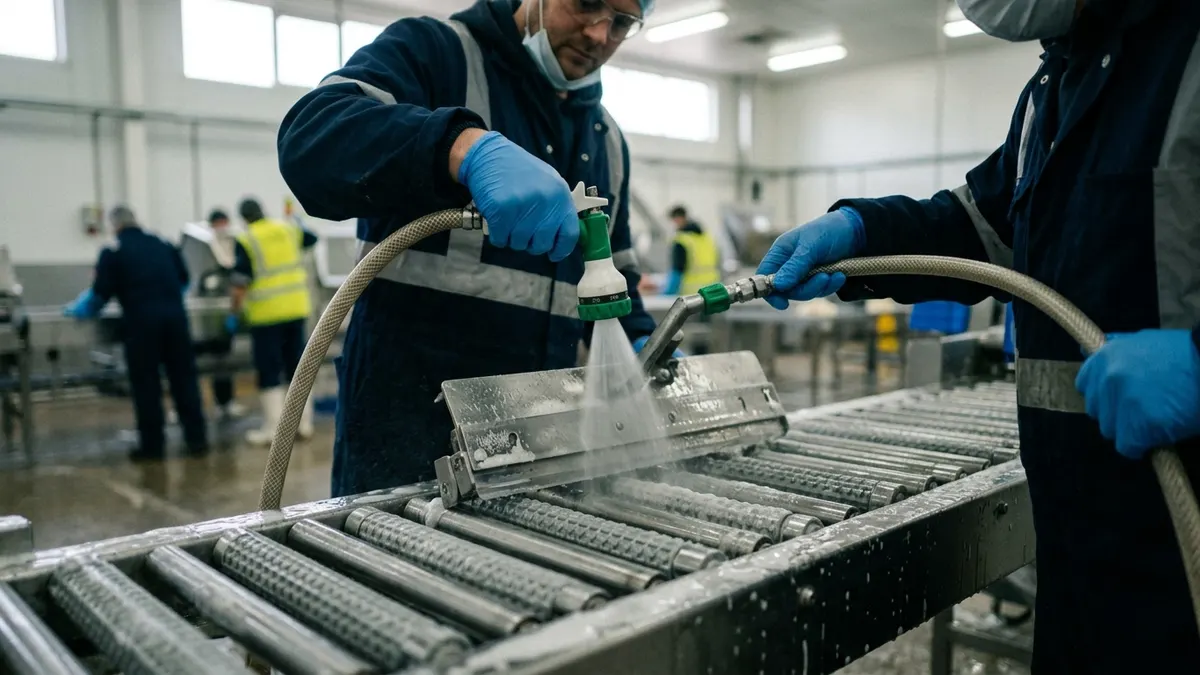
Both frameworks lean on prerequisite programs, which are the basic conditions that keep a plant hygienic: sanitation, pest control, supplier approval, maintenance, personnel hygiene and similar controls. HACCP relies on them quietly, and many plants keep them in separate procedures. ISO 22000:2018 puts them in the standard, with clause 8.2 requiring the organization to establish, implement and maintain prerequisite programs.
Where operational PRPs come in
The bigger change is a second control category. HACCP has one: the critical control point, where a measurable limit lets the plant stop a hazard at a defined step. ISO 22000:2018 keeps CCPs and adds operational prerequisite programs, usually shortened to OPRPs.
An operational prerequisite program controls a significant hazard that is not suited to a CCP. Typical cases are allergen changeover, cross-contamination control between raw and ready-to-eat zones, or foreign material prevention. These controls matter, but they often cannot be measured against a critical limit in real time, so forcing them into the CCP model produces weak monitoring.
Under clause 8.5.2 of ISO 22000:2018, the hazard analysis decides which control measures are CCPs and which are OPRPs. Clause 8.5.4 then requires a hazard control plan that sets out how each one is monitored, what action follows a failure and who is responsible.
The OPRP category exists to keep the CCP list short and meaningful. A plant that labels everything a CCP ends up with limits it cannot monitor, which is a common reason for findings at audit.
Direct Comparison Matrix: Side-by-Side Breakdown of Requirements
The table puts the two frameworks next to each other. Cells are short on purpose; the explanation sits in the sections above and below.
| Area | HACCP | ISO 22000:2018 |
|---|---|---|
| Type | Hazard control method | Food safety management system |
| Leadership role | Not specified | Policy, roles and resources required |
| Hazard control | Critical control points | CCPs plus operational PRPs |
| Prerequisite programs | Assumed in place | Required and managed under clause 8.2 |
| Internal audit | Verification of the plan | Planned audit program for the whole system |
| Management review | Not required | Required at planned intervals |
| Improvement | Corrective action | Nonconformity, corrective action and system update |
| Certification | Possible through some schemes | Third-party certification to the standard |
The table shows why a plant that holds one does not automatically hold the other. A HACCP plan covers the hazard control rows well. It leaves the leadership, audit, review and improvement rows empty unless the plant builds them separately.
Regulatory and Buyer Mandates: How SFCR and Global Retailers View Each Framework
Canadian federal rules ask food businesses to prevent hazards through documented controls. The Safe Food for Canadians Regulations set out licensing, preventive control plans and traceability for businesses that import, export or trade food across provincial borders. A HACCP-based preventive control plan is the usual way to show those controls.
That means the regulatory minimum is a working hazard control system, not an ISO certificate. A facility can meet federal expectations without ever being certified to ISO 22000.
Where buyers push further
Certification enters the picture when a customer asks for it. Many large retailers and food service companies require suppliers to hold a certificate under a scheme benchmarked by the Global Food Safety Initiative. ISO 22000 on its own is not one of those benchmarked schemes. FSSC 22000, which adds sector prerequisite requirements and extra scheme rules on top of ISO 22000, is.
FSSC 22000 Version 7 is the current version, released on 1 May 2026, and audits against Version 6 are allowed until 30 April 2027. A plant that sells to a buyer requiring GFSI recognition therefore often needs to look past ISO 22000 and ask which scheme the customer accepts.
Illustrative example: A bakery with a regional customer base holds a HACCP-based preventive control plan and passes its regulatory inspections. When a national grocery chain asks for a recognized certificate before listing its products, the bakery learns that a plan alone will not satisfy the buyer. It builds an ISO 22000 system first and then moves to a scheme the chain accepts.
Decision Framework: Selecting the Right Food Safety Path for Your Plant
A decision grows out of three questions: what the regulator needs, what the customers need and how much structure the plant can support. The checks below turn those questions into a starting point.
When HACCP alone is enough
- The plant sells locally or to buyers who accept a documented preventive control plan, and no customer has asked for a certificate.
- The product range is narrow and the process is stable, so a small team can keep the plan current without a larger management system.
- The business wants a sound foundation now and may add certification later.
When ISO 22000 fits better
- A customer asks for a certified food safety management system, or the plant wants to prepare for a GFSI-recognized scheme.
- The plant has several products, lines or sites and needs one structure that keeps hazard control consistent across them.
- Leadership wants audits, objectives and management review to drive food safety rather than leaving it to one person.
For plants that already run a quality system, ISO 22000 food safety certification often costs less effort than it first looks, because the structure is familiar. Food and beverage operations in particular can see the details in the food and beverage industry overview before deciding.
Important: HACCP work is never wasted. A validated hazard analysis, process flow diagrams and monitoring records carry straight into an ISO 22000 system, so starting with HACCP does not mean starting over.
Frequently Asked Questions
Is ISO 22000 certification required for food manufacturers in Canada?
No federal rule requires it. The Safe Food for Canadians Regulations ask licensed businesses to hold a preventive control plan, and a HACCP-based plan usually serves that purpose. Certification becomes a requirement only when a customer or a retailer puts it in a supply agreement.
Can a food processing facility hold both HACCP and ISO 22000 certification?
Yes, and the two fit together without conflict. ISO 22000 already includes the HACCP principles inside its hazard analysis, so a facility that certifies to the standard has built a HACCP plan as part of the system. Some customer programs ask for the HACCP plan to be shown separately, which the plant can do from the same records.
Does meeting HACCP requirements automatically satisfy ISO 22000 standards?
No. A HACCP plan covers the hazard control portion of the standard, but ISO 22000:2018 also requires leadership commitment, planning, resource management, communication, internal audit and management review. A plant with a strong HACCP plan has a head start, though it still needs to build those system elements.
Why did ISO 22000 introduce operational prerequisite programs alongside CCPs?
Some significant hazards need control but cannot be measured against a critical limit in real time. Allergen changeover and cross-contamination are typical cases. Operational prerequisite programs give those controls a proper place in the hazard control plan, with monitoring and corrective action, without stretching the CCP concept past what it can support.
How much longer does it take to implement ISO 22000 compared to standalone HACCP?
A reasonable expectation is several additional months for a plant starting without a management system, since leadership, audit and review routines must be written and run long enough to produce records. A plant with an existing quality system often moves faster. A gap assessment gives a far better estimate than any general range.
A plant that is weighing the two options does not need to settle the question alone. ISO Certification Consultants work with food and beverage operations to compare what a regulator, a buyer and the plant itself need, and a free ISO readiness assessment is a practical first step. To talk through which framework fits your facility, book a consultation.